

Quick Summary
Choosing between dental implants and dentures depends on factors like the number of teeth being replaced, your jawbone health, and your budget. Dental implants are surgically placed titanium posts that function like natural tooth roots, offering a fixed, long-lasting replacement that preserves jawbone density over time. Dentures are removable appliances that replace some or all of the teeth in an arch, offering a more affordable, non-surgical option, though they require more daily maintenance. Understanding these differences in cost, durability, and care helps you decide which option best fits your needs.
Losing one or more teeth affects far more than your smile, influencing everything from chewing ability to jawbone health, which is why understanding dental implants vs. dentures matters before making a decision. Both options have helped patients regain confidence and function for decades, yet they work in very different ways and suit different circumstances.
How Dental Implants Work
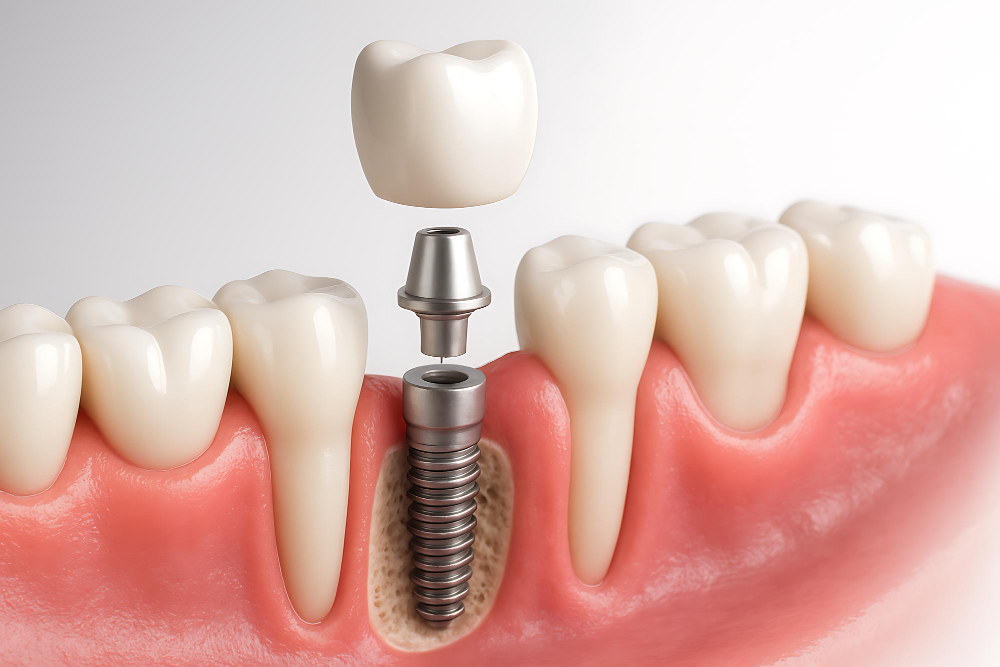
A dental implant is a small titanium post that a dentist surgically places into the jawbone, where it functions as an artificial tooth root.
Over a period of several months, the bone gradually fuses to the implant through a process called osseointegration, creating a stable foundation. Once healed, a custom crown, bridge, or denture is attached to the implant, restoring both function and appearance.
Because implants integrate with the jawbone, they typically offer between eighty and ninety percent of the strength of a natural tooth, allowing patients to eat most foods without the restrictions often associated with removable appliances.
How Dentures Work
Dentures are removable appliances custom made to replace some or all of the teeth in the upper or lower arch. Partial dentures fill in gaps where natural teeth remain, while full dentures replace an entire arch of missing teeth.
Modern dentures rest on the gums and are held in place through suction, adhesive, or in some cases, a connection to dental implants for added stability.
Dentures do not require surgery, which makes them a more accessible option for patients who may not be candidates for implant surgery due to health conditions or insufficient jawbone density.
Comparing Cost and Long-Term Value
Dentures generally have a lower upfront cost compared to dental implants, making them an appealing option for patients replacing multiple or all of their teeth on a budget.
Dental implants require a higher initial investment due to the surgical placement and healing process involved, but many patients find the long-term value worthwhile, since implants can last decades with proper care and do not require the replacements or adjustments that dentures often need over time.
Discussing your specific situation with your dentist helps clarify which option offers the better value for your particular needs and timeline.
How Each Option Affects Jawbone Health
One of the most significant differences between these two treatments involves what happens to the jawbone over time.
When a tooth root is missing, the surrounding bone gradually loses density because it no longer receives the stimulation that comes from chewing forces transmitted through a natural root. Dental implants replicate this stimulation, helping to preserve jawbone density in the area of the implant.
Dentures, since they rest on top of the gums rather than integrating with the bone, do not provide this same stimulation, which is why many denture wearers experience gradual bone loss and changes in facial structure over the years, sometimes requiring denture adjustments or relines.
Daily Care and Maintenance
Dental implants are cared for much like natural teeth, requiring regular brushing, flossing, and routine dental visits, without the need for special cleaning solutions or nightly removal.
Dentures require a different care routine, including daily removal for cleaning, soaking in a denture solution overnight, and periodic professional adjustments as the shape of the gums and jaw changes over time.
Patients who prefer a low-maintenance, more natural feeling option often lean toward implants, while those who want a non-surgical, more affordable solution may find dentures better suited to their preferences.
Who Is a Good Candidate for Each Option?
Not every patient is automatically a candidate for dental implants. Sufficient jawbone density is necessary to support the implant, and certain health conditions, including uncontrolled diabetes or a history of smoking, can affect healing and candidacy.
Patients considering dental implants in Baton Rouge, LA undergo an evaluation involving imaging to assess bone quality before treatment begins.
Dentures, on the other hand, are generally accessible to a wider range of patients since they do not require surgery, making them a practical option for those who are not candidates for implants or who prefer to avoid a surgical procedure.
Combining Implants and Dentures
For some patients, the best solution is not choosing one option exclusively but combining the two. Implant-supported dentures use a small number of strategically placed implants to anchor a full denture, offering significantly improved stability and chewing function compared to a traditional denture, while remaining more affordable than replacing every individual tooth with its own implant.
This hybrid approach has become increasingly popular among patients looking for the security of implants without the full cost of a complete implant-supported arch.
Why Baton Rouge Families Choose Grand Family Dentistry
Grand Family Dentistry has built our reputation on providing leading edge dentistry for the whole family, and tooth replacement is one of the areas where thoughtful, individualized care matters most.
Whether you are exploring dental implants or dentures in Baton Rouge, LA, our team walks you through every step, from the initial evaluation to the final fitting, ensuring you understand your options at each stage.
We know that replacing missing teeth is about more than appearance, and we treat every patient’s situation with the attention it deserves.
How the Placement Process Differs
The process of getting dental implants looks quite different from the process of getting dentures, and understanding this timeline helps set realistic expectations.
Implant placement begins with a surgical procedure to insert the titanium post into the jawbone, followed by a healing period of several months while the bone fuses to the implant. Once healing is complete, an abutment and final restoration are attached.
Dentures, by contrast, involve taking impressions of your gums and remaining teeth, followed by a series of fittings to ensure proper shape and bite alignment, completed over several weeks without any surgical component.
Eating and Speaking With Each Option
Patients often ask how each option affects daily activities like eating and speaking. Because implants are anchored directly in the jawbone, they allow for a bite force close to that of natural teeth, meaning most patients can eventually eat a full range of foods, including firmer items like apples or steak, without concern.
Dentures, especially full dentures, generally require some adjustment to diet, as very hard, sticky, or chewy foods can be more difficult to manage and may loosen the appliance. Speech can also take a short adjustment period with new dentures, though most patients adapt within a few weeks of consistent wear.
Understanding the Timeline for Dental Implants
Because dental implants involve a healing period for the bone to fuse around the post, the full process from initial consultation to final restoration can take anywhere from three to eight months, depending on individual healing rates and whether any additional procedures, such as bone grafting, are needed beforehand.
While this timeline is longer than the process for dentures, many patients find the wait worthwhile given the stability and natural feel that implants provide once treatment is complete.
Financial Considerations and Payment Options
Cost remains one of the most significant factors patients weigh when choosing between these two tooth replacement options. Beyond the initial price difference, it is worth considering the potential long term costs associated with each choice, including denture relines, adjustments, or eventual replacement compared to the durability of implants over many years.
Many dental offices, including our own, work with patients to explore financing options that make either treatment more manageable within a reasonable monthly budget, so cost alone does not have to be the deciding factor.
Common Concerns Patients Have About Implants
Patients considering implants sometimes worry about the surgical component of the procedure, though modern implant placement is a well established, routine procedure performed under local anesthesia, with most patients reporting only mild discomfort during recovery, similar to what follows a tooth extraction.
Others worry about implant failure, though success rates for dental implants are generally high when patients are good candidates and follow proper aftercare, including good oral hygiene and regular dental visits to monitor the implant’s health over time.
How Denture Fit Changes Over Time
One aspect of denture wear that surprises many first-time patients is how the fit of a denture can change as the shape of the gums and underlying bone naturally shifts over months and years.
Because dentures rest on the gum tissue rather than integrating with the bone, ongoing bone loss beneath a denture can lead to a looser fit and, at times, irritation or sore spots.
Periodic relines, where the base of the denture is adjusted to better match the current shape of the gums, help address this issue and are a normal part of long term denture maintenance.
Caring for Your Smile After Tooth Replacement
Regardless of which option you choose, ongoing care plays a major role in how well your new teeth function and how long they last. Implant patients should continue brushing and flossing around the implant restoration just as they would natural teeth, paying close attention to the area where the restoration meets the gum line.
Denture wearers should remove and clean their appliance daily, brush their gums and any remaining natural teeth gently, and avoid sleeping in their dentures unless specifically advised otherwise by their dentist, since giving the gums a nightly rest supports healthier tissue over time.
Partial Solutions for Partial Tooth Loss
Not every patient is missing an entire arch of teeth, and treatment does not need to be all or nothing.
For patients missing only a few teeth, a single implant or a small implant supported bridge can replace those specific teeth without affecting the surrounding healthy teeth. Removable partial dentures offer a similar targeted solution for patients who are not candidates for implants, filling gaps left by missing teeth while clasping onto remaining natural teeth for stability.
Taking the Next Step Toward a Restored Smile
Living with missing teeth affects far more than appearance, influencing everything from nutrition to self-confidence in daily interactions. Whichever path you choose, addressing missing teeth sooner rather than later helps prevent additional complications, such as shifting teeth or further bone loss, from developing in the meantime.
A thorough evaluation with your dental team is the clearest way to understand which option truly fits your specific needs.
Not sure whether implants or dentures are the right fit for you? Schedule a consultation with Grand Family Dentistry and let our team help you find the best solution for your smile.
Frequently Asked Questions
How long do dental implants last?
With proper care, including regular brushing, flossing, and dental visits, dental implants can last for decades, and many patients keep their implants for the rest of their lives.
Are dentures uncomfortable to wear?
New dentures often require an adjustment period, and some patients experience mild discomfort or soreness initially. Properly fitted dentures, along with periodic adjustments, help minimize discomfort over time.
Can I get dental implants if I have bone loss?
In some cases, yes. Patients with insufficient jawbone density may still be candidates for implants after a bone grafting procedure, which helps rebuild the bone needed to support the implant.